
E4. "This I Do For You" - Can you be a hero, if you didn’t know you volunteered?
“Can you be a hero, if you didn’t know you volunteered?”
Kolby, Jeremy, and Ashley discuss the ethics in the short story, “This I Do For You” available to download on Amazon.
Transcript (By Transcriptions Fast)
This I Do For You
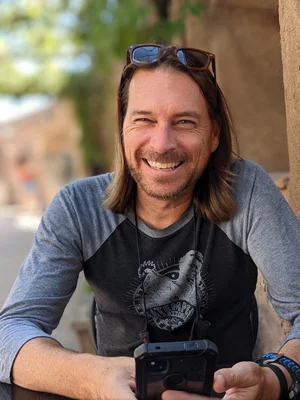
Kolby: Okay, welcome back again to Episode 4. It’s a thing now. It’s not just a hobby. After Dinner Conversation, short stories for long conversations. After Dinner Conversations is a website of a growing collection of short stories across genres meant to draw out deeper conversations like the one we’re having today. I’m your co-host Kolby, here with co-hosts Jeremy and Ashley. And we are at the…
Jeremy: La Gattara.
Kolby: La Gatarra, thank you, for our fourth week in a row.
Jeremy: Cat Café.
Ashley: Come visit. It’s in Tempe Arizona.
Kolby: Here with a very large cat that’s freaking out over whatever’s in that thing.
Ashley: The cat’s up for adoption. This is a big, big lover boy.
Kolby: Yeah, this would be a good cat to adopt especially if you needed some home protection because I feel like that cat could take out a criminal.
Ashley: Nah, the cat would just go up to him and lay on him like, “I got him!”
Kolby: Seriously, that’s like a 15-pound cat right?
(laughter)
Ashley: Yeah, but get that cat some catnip. Look at him, he turns into a butterball.
Kolby: So, the story that we’re discussing today is “This I do for you” by Margaret Karmazin, maybe?
Jeremy: Karmazin?
Kolby: It’s available on Amazon, Apple, every place that you can get e-books and you can download it to your e-reader, tablet, computer, whatever else. You should ideally read it before you’ve listed to the story.
Ashley: Especially this one. There’s a spoiler alerts that we’re going to be talking about.
Kolby: Yeah, so we’re totally going to spoil the story.
Ashley: Hit pause on this, go read it, then hit un-pause and then watch.
Kolby: Yea for sure because this is one where once you’ve heard this you kind of ruins it. So, I forget who’s doing the… Ashley you want to do the “what happened?”
Ashley: What happened… dun dun dun. So, there is the main character, Ah- Deet. It’s basically her life story, she’s growing up but she’s kept indoors in a special room.
Kolby: I totally thought it was a guy, not a girl.
Ashley: Yeah, I thought it was.
Jeremy: I have no idea.
Jeremy: There was a line, “you’re my favorite brother, Ah-Deet”.
Kolby: Maybe because you’re a woman, you always read with your gender in mind.
Ashley: Oh, I see what… okay.
Jeremy: It wasn’t revealed until the very end.
Ashley: Okay. So technically it’s a he/she/it/them. Anyway, kept indoors, kept being fed, not allowed outside, not allowed to learn about the outside world.
Jeremy: I’d want to point out it’s in an alien culture, it’s not people.
Kolby: You never really get what they are, right?
Ashley: They are hatched and they live underground dorms, 4 legs…
Jeremy: Almost like giant ants but not ants, that’s how I got it.
Kolby: Just sort of a fictional thing.
Ashley: The only thing we know, is that her father who’s no longer around, was also large. And she’s also pretty darn big.
Kolby: Full figured.
Ashley: Yes, she’s curvy. Or he’s curvy. Or it is curvy. Either way, the story progresses until finally the main character is revealed that their entire life’s purpose is to feed the community in time of famine…
Kolby: With their bodies.
Ashley: With their bodies, and sure enough, that time has come.
Kolby: And just to be clear, not in the “I’m going to milk you” sort of way. In the…
Ashley: Like the, “we will eat you.”
Kolby: Like, “bullet in the back of the head, grind you up, and you’re now like food mullet.”
Ashley: Now keep in mind, this person has been kept watching television, basically has a servant, no outside communication but just gets fed a bunch of food.
Kolby: All the time.
Ashley: All the time. Like, living the dream.
Kolby: Until he gets killed and fed up to everyone during the time of starvation.
Ashley: But the point is, this character doesn’t know why it’s been kept, the mother doesn’t tell why he’s kept inside. Siblings are taken away; they no longer visit.
Jeremy: Just eats and watches tv.
Ashley: To that leads us to our ethical dilemma of the ultimate sacrifice.
Kolby: Is this person a hero?
Ashley: Is this person a hero?
Kolby: I’m a hard no.
Ashley: For helping to save the community. Not a hero?
Kolby: I’ll tell you why… let’s say, I’m like, “hey, I’m going to cross the street because I need to go to work.” And in the way of crossing the street, I unknowingly set off a chain of events that saves humanity.
Jeremy: So, you’re turning this into a trolley problem…
Kolby: Everything’s a trolley problem.
(laughter)
Kolby: All I was doing was, just doing what I do. I feel like in order to be a hero you need a couple of things. I feel you need fear and I think you need to act in the face of that fear. So, if I get in a fight with a toddler, I’m not a hero because I’m not afraid and I knew I was going to win.
Jeremy: You’re not going to win.
(laughter)
Kolby: If it was a scrappy toddler, I’m definitely not going to win. Let’s say, you go skydiving to save the world but you like skydiving. You’re not a hero. If I’m terrified of heights and I go skydiving to save the world, I’m a hero because I’ve sacrificed some fear or something intentionally, with intent, because I know there’s a greater good for it. And that’s why I don’t think this person is a hero because they never, until they got clubbed in the back of the head, they never even knew their purpose.
Jeremy: So, that’s the interesting thing I came away with this story. And I don’t know if this was the intention but, if you look at tribal cultures, basically smaller cultures that live in villages, everybody knows each other, there’s a lot more ritual around death. The societies grieve in a different fashion and there are rituals around that and community involvement. And what I get from this story is a very similar, that once you modernize into larger communities, or at least what we’ve done, is we push death to the background and nobody talks about it and it’s this taboo for your culture. So, that has happened in this society where in the past, when it was a more tribal community, this it was something that the person was raised to do, and they knew the entire time that this was their purpose but, in this story, that has been taken from them, they’re not told what they’re doing.
Kolby: There’s no choice.
Jeremy: There’s no choice. And maybe they’re probably would not have been a choice in the past, there may have been, but it would’ve been “this is what you’re going to be raised for, but this is a position of honor.” In this story, it’s not a position of honor, the family that has to take care of her is ashamed and it’s a burden on the family, it’s not an honor. And that’s a change to their society and how their society deals with death. At least this was the interesting sub-text to this and how our society has changed in the same way. And so, because it’s really, the honorific thing is the mayor comes by at the end and says, “hey you’re going to save everybody, good job!”
Kolby: Yeah. Take a picture with the person before they die.
Ashley: How about even just the original selection criteria? It’s you were born big; you were a big baby. That is literally it. It’s this character and what, three others that were deemed big and did the mother even have any say over that? Keep in mind her father was large, and didn’t get selected, so there might have been enough larger babies that didn’t need to be selected.
Jeremy: Now that’s a question that’s raised too… would my father have allowed this to happen.
Ashley: Exactly.
Kolby: Here’s what I think would’ve made the character a hero, is after they found out their purpose, the very end of the story, if they’d been like, “and we’re going to have to kill and eat you just so everyone else can live.” If the character would have just said, “ok.” That’s all they would’ve had to done to be a hero in my mind, as opposed to not having any choice in the matter. Even if you didn’t choose to walk down that path, if you choose the last moment, you’re like, “I’m ready” that’s all that would have needed to been said to be like, “yep, hero!”
Ashley: I’d like to know why, again, why did they choose to make this, like, .. hide her purpose. It’s a shameful thing. When in reality without that, you all would be dead. You think they would’ve flipped a switch community wise to be like, “Yo, this person is going to be the greatest thing ever. We will not live without it.”
Jeremy: I think that would completely change the story if there were more… if it were a position of honor and there was a bunch of ritual and meaningful things around this so the person knows.
Kolby: As opposed to a shameful secret.
Jeremy: Yeah, where they’re not even going to tell you about it until the last minute.
Ashley: My only thing with the way you talked about heroes was there has to be some fear and then them overcoming that fear. What about those people that aren’t afraid to join the army? That aren’t afraid to be sent over to Iraq? Like, they know that’s what they’re meant to do. They aren’t afraid to die. Are they still considered a hero?
Kolby: Yes, I think for me yes. Because, when you join the military, maybe you’re doing it because you want to get a free college education or maybe to get out of a bad situation. And even if you’re not on the frontline, even if you’re an accountant in the military, when you sign up you have at some point said, “I know that I am putting myself potentially in harm’s way, I might not be, but I might be and I understand I’m getting free college education out of it, but I choose.” And if it turns out you’re doing it for the free college educations or you end up being an accountant for the Air Force, you might not have been an accountant for the Air Force, you might not have ended up…. I think it’s that decision is the thing.
Jeremy: The decision is part of it.
Ashley: My whole thing is if she’s a hero, is my main point was the overcoming the fear and it was not by choice. It wasn’t her decision to put herself in that situation so I think it’s a choice thing, not necessary an overcoming fear or having a fear to begin with. It’s a sacrifice, it’s your choice to give of yourself so something greater.
Kolby: So, does that mean every breastfeeding mother is a hero?
Ashley: They are sustaining life.
Kolby: So, it’s kind of the same.
Ashley: They’re kinda awesome. Mom’s are kinda awesome.
Kolby: I don’t want to get in trouble with my mom.
(laughter)
Kolby: Let me ask this then, do you think that there’s any bad guys in this story?
Jeremy: No, not directly.
Kolby: Not even the mom or society.
Jeremy: It’s a society problem, it’s not an individual, you know, this is a bad person for…
Kolby: So, anything that perpetuates the race, whatever that race may be, is it not a bad thing, is a necessary evil? I don’t know if I can buy that.
Ashley: I think its societies construct as a whole.
Kolby: Next thing you know you’re killing off old ladies with cancer to make space.
Ashley: The thing is, say the mom doesn’t follow the rules and feeds the kid to be huge, like she’s supposed to, are there ramifications against her? Isn’t she just following the laws? Is she a bad person for following the laws? So, I think it goes back to being more communal of an issue, their social constructs, not necessarily that the mom did anything bad by not telling the kid, not that the butler did anything by telling the kid, everyone kept it a secret. I don’t think they were bad; they were just following their social construct. Now is their social construct bad?
Kolby: But that’s a sort of cultural thing.
Jeremy: Which it is a very cultural thing.
Kolby: I’m going to take the other side on it. I think there’s a bad person in this, maybe… maybe I’m just throwing stones. I think the main character, the one who becomes heavy and dies, is a bad character, is a bad person, and I’ll tell you why… The mom, you can be like, “well, maybe it’s a cultural thing, maybe she didn’t have a choice, maybe it’s an honor, maybe it’s a selection process.” Even the society, they’re perpetuating your race. Surely you must make some hard choices but for the main character, how do you go your whole life and not do anything to seemingly ask “why? Why is everyone feeding me, why don’t I get to leave the house?” Why do you take no…
Jeremy: Personal responsibility.
Kolby: Yeah, personal responsibility for being different in a way that you don’t understand.
Jeremy: I guess in her defense…
Kolby: Agency, that’s the word I’m thinking of.
Jeremy: Agencies, sure. But I feel like by the time in the story that she is asking questions, she’s no longer able to walk, or really, you know, she’s stuck in this position she’s been fed.
Kolby: Because it’s from the time it was an infant, so it wouldn’t know any different anyway. You can’t hold a toddler accountable, that’s a good point.
Ashley: I want to disagree; she asks questions from the very beginning. “Mother, where’s our money come from? Why is father gone? Why don’t the siblings come and visit anymore?” Maybe not asking the right questions, but continually questioning the whole…
Kolby: So, do you think there’s some accountability there?
Jeremy: In the mom? Certainty.
Kolby: In the mom, for not giving better answers?
Jeremy: Yes.
Ashley: How do you handle it? How do you handle the social pressure to lie to your child? Every single parent lies to their kid about Santa Claus.
Kolby: WHAT?
(laughter)
Ashley: Oh, busted, spoiler alert! Oh man.
Jeremy: What about Santa Claus?
Kolby: Yea, what about Santa Claus?
(laughter)
Ashley: You have to lie to this kid and she has to tell this terrible, terrible, lie, maybe she just didn’t….
(laughter)
Ashley: Sorry, the cat just went flying off the table, full paws in the air.
Kolby: I think that also creates a separation between mother and child.
Ashley: Oh absolutely.
Kolby: If you’re the mother that knows you might have to kill your kid someday, but you don’t tell them, how do you ever have a great conversation with them?
Ashley: Again, is she ashamed of the kid? Remember, you don’t talk about it, you don’t anything, you don’t even want to be around. Like, later on it sounds like the mother isn’t even around anymore, it’s just the butler for most of the part.
Kolby: Yeah. So, you think the mom’s the rougher one in this story?
Jeremy: The mother could’ve taken a more active role.
Kolby: Do you think the mother had an obligation, on the sly to be like “hey kid..” Sorry, I gotta do it this way towards the camera, “hey kid.”
Ashley: He could’ve gone on a hunger strike if you told her.
Kolby: “if you quite eating and make a run for it, you might live.”
Ashley: No.
Kolby: Do you think you have an obligation to provide the child enough information to create choice?
Ashley: Yea, but then here comes the government, “why is the chosen one down 18 pounds? Why are they on a hunger strike? What did you tell them?”
Kolby: But honestly, I think you have an obligation to do that anyway.
Jeremy: Yeah.
Kolby: I feel like even though it affects the future of the culture, and the future of the culture/group to go through a famine, I think you have to provide it.
Ashley: It’s not about going through a famine. This is life or death. If these people don’t gain the weight, if these select 4, the whole society is dead. Is dead. There is no, “well, maybe we’ll survive.” No, they are dead.
Kolby: I agree. I’m… I’m… I’m struggling with this one more. I think that you have to give someone that choice and if they choose…
Ashley: What if nobody chooses?
Kolby: Then everyone dies. I think that’s what you have to do. I think you have to give people choice, because for me, I’m not saying for everyone, I think the rights of an individual are paramount to the rights of the group. They’re higher than the rights of the group. And that you would hope the individual would have enough personal responsibility to understand their obligation to the group.
Ashley: I’m going to back it up for 2 points: 1) What if it’s only the people that are born fat have whatever it is that allows them to gain so much weight? 2) they have to start at a young age. They have to start eating at such a young age because they can make choices.
Jeremy: Yes and no.
Ashley: Just throwing that out there.
Jeremy: You could just have more of them and let them decide.
Kolby: Right! Just have a dozen of people instead of 3.
Jeremy: Exactly. And at some point, first you’re selected, you will have the option when you’re older to really do this for the community but it has to be a choice.
Ashley: But what if you have to start the process when they’re so young? All of a sudden, you’re 18 and they’re like, “You have to gain 100 pounds in 5 days”, that’s not going to happen there bro. Again, you’re making the assumption there are enough people born that meet the criteria that can start putting on that weight super-fast.
Kolby: Here’s the thing I struggle with though about that; So, it’s one thing to say, and this makes a really clear black and white example, like somebody must do this or we all die. And so therefor the rights of the individual are not as important as the rights of the community. But here’s the thing. Why don’t you say that same thing with high fructose corn syrup? Be like, “look, we as a society, we’re not all going to die, but we’re all going to be worse, and so we want to take you’re right away as an individual because we want the society to have lower medical costs, to be healthier, to not have to make seats bigger on airplanes or whatever. In this case, it’s a simple yes and no, but I think once you’ve made that distinction, you can start lowering the bar, all the way down to like, “look, we’d really rather you didn’t have any cigarettes.”
Jeremy: Exactly. But is everything a slippery-slope.
Kolby: Like, I know that’s a total easy way to go. The slippery slope arguments always the easy one, but I think that just means this civilization dies, which is sad because that’s the way it goes. That’s just for me. I’m not saying that’s the definitive answer.
Jeremy: Right. But without knowing there’s an age factor, there’s a better way to do this, make it a more honorable thing, everybody’s included, you can start this at a later age, even if there’s an initial weight requirement, you can still allow those people that choice.
Ashley: Yea.
Kolby: So, here’s what I think would make it a harder question, is if there was something about the way your body developed.
Jeremy: And that’s the questions we don’t know. That you have to start early.
Kolby: That if you don’t start within the first 6 months of life, you can’t do it. And once you start it, you can’t undo it because of some enzyme comes on that you store fat in a different way.
Jeremy: There’s still a better way to do that.
Ashley: Then who’s decision is it? Is it the mother? Is the parent?
Jeremy: It’s still not their decision, but you can approach it in a different way that makes them more honored and makes them understand what the decision is.
Kolby: You get a statue before you get killed?
(laughter).
Kolby: Like, “look, you got this statue. By the way here’s the baseball bat.”
Ashley: Make them seem like kings, like, “you are the chosen one, you are all great and all worthy.”
Kolby: Joe Vs the Volcano.
Jeremy: You’re still not just isolated your entire life until we need you.
Kolby: I think that’s also the cruelty of it.
Jeremy: That’s really the cruelty of this, is they’re not included in the society and they need to be included in the society in a way that is beneficial to them so that once they do have to sacrifice that they understand what it’s for and they’re okay with it. There’s a way to do that.
Kolby: What if they opt out though? What if they’re like, “nope.” Are you okay with the society then just dying off because everyone’s like, “look, I love everyone, but I love me better.”
Jeremy: That’s a different question. You get a choice until you don’t. You can’t opt out of this, this is your role, it was chosen for you, but here are the advantages.
Ashley: Think of the King of England, like Prince Charles, he’s going to have to take it. He can give it up, he knows it’s a big no-no.
Kolby: This person never went hungry their whole life. They never went without their whole life.
Jeremy: They went without contact and love.
Ashley: What if this was only temporary? Like, they say they’re looking for other solutions. The brothers working in the scientific community, they’re like, “listen, this is a great honor you can do this for us and trust me, we’re not trying to do this forever.” Is it permissible for a small period of time?
Kolby: I’m more okay with that actually.
Jeremy: Yeah. While they’re continuing to look for other avenues.
Ashley: So, you would be okay with your kid getting eaten as long as they’re looking for alternatives. What if they never find an alternative?
Kolby: And it’s a totally… yeah, that’s totally unfair flip-flop that I’ve done.
(laughter)
Ashley: I’m just throwing it out there.
Kolby: I feel like there are different… it’s different if it’s like, “look, this is a one-time problem, we have a one-time solution, we’re coming up with something different.” As opposed to, “this is our culture and it’s forever.”
Ashley: What if this has been going on for decades and decades and decades.
Jeremy: I think this is a thing going on for centuries.
Ashley: Exactly.
Jeremy: And to me, it feels like the culture used to do something.
Kolby: It was a more ritualistic thing, more medicinal.
Jeremy: It was more ritualistic, and because of modernization, and because they’ve become a complex society, death has been pushed into the background. And it’s a taboo item, so you can’t talk to these people about what they’re doing, what they’re doing for the community.
Kolby: I want to ask a couple of questions on our sheet really quickly. So, if you were living in this community, would you eat the person?
Ashley: So, there you go… there’s choice.
Kolby: You could choose non-participation. That can be your silent protest, like, “I’m just going to starve to death.”
Jeremy: Again, it’s a culture where this has always been done.
Kolby: So, you’d eat Bob is what your saying? I’m never going to be on a drifting raft with you, that’s my main goal. You’re telling me you’re going to eat me?
Jeremy: Going back to last weeks story, you’re in the cave. You’re part of this culture, this is the norm, so until you’ve stepped out of that, you’re going to just keep looking at the shadows.
Ashley: This is where you get your option. This is where it comes down to you get your option to eat it or you don’t. That’s where you get to decide, “I’m going to die off because that’s my personal moral code not to survive.”
Kolby: I can make my choice for me, and my choice for me is no. I’m not faulting you guys for saving the society necessarily. I say that until I can’t skip a meal.
(laughter)
Kolby: Hypothetically, if I could skip a meal. I’m getting kinda peckish right now.
Ashley: I’d like to touch on one point. When I was reading this story, the entire time of seeing this one child being put into a certain room and being fed and being ignored and put in their special zone, I was thinking it was being like the next queen bee. Being the mother ant. The queen of the hive. That was my actual interpretation.
Kolby: I don’t think being pregnant all the time is a much better future.
Ashley: But I was thinking, doesn’t need to move, gets fed, just chills out and watches TV all day, I’m like, “man, they are treating this thing like royalty.” That was my initial...
Kolby: I can see it being a queen bee thing.
Ashley: I was like, all of a sudden to flip it and be like, “no, you’re going to get eaten.” Boom.
Jeremy: And I think the difference, maybe the difference again, is how it’s presented to them and what their knowledge of their life is. So, to not know is the bigger crime here.
Kolby: I’m curious, were you guys both eat or don’t eat?
Jeremy: Eat.
(laughter)
Ashley: On one hand, you gotta do what you gotta do to keep the society keep on going.
Kolby: It’s your choice though, you don’t have to eat if you don’t want to. But the only one who starves is you.
Ashley: I’d be in the scientific community being like, “work harder guys, we gotta figure it out!”
Kolby: While you’re snacking?
Ashley: Shhh, just little bits. I would definitely, enough to keep me going, but not enough to take advantage of the situation.
Kolby: I assume nobody is feasting on these people.
Jeremy: I think they’re getting a little bits at a time.
Kolby: It’s the 400 calorie a day.
Jeremy: Its famine food.
Kolby: It’s famine food, you’re spreading it out. Okay, one more question then we can call it quits I suppose on this one. Is it fair to impose cultural norms on goodness, morality on others? Is it fair for us to tell them, “you’re wrong.”?
Ashley: No.
Jeremy: I think absolutely not. That’s the prime directive.
Kolby: I knew that’s your answer, which is why I have a follow up question. What about if you go somewhere, to another culture in America or in the world, and they think prostitution is okay, or they think theft is okay or they think that rape is okay? Do you just go there and be like, “who and I to judge?” And we do judge and do we have a right to do that?
Jeremy: We absolutely do judge and again, it’s complex, it depends because there’s a lot of factors behind whatever’s going on and yet it can be immoral and it can be immoral in their culture.
Kolby: What about hitting kids? Say you go to some other country and it’s totally okay to just like, wail on your kids as part of like, you know, teaching your kids rules but not like a little bit, like whaling on your kids. Do you jump in and stop the dad from hitting the kid, or do you, “different culture, different rules?”
Jeremy: Yes, I think you have to jump in and stop.
Kolby: But you just said… that’s the exact opposite of what you just said.
Ashley: You come in with the understanding that you need to be respectful of their traditions and their cultural norms. You can sit down and be like, “just so you know, just putting it out there, there’s another way you can go about this. It’s worked it our community, maybe give it a try? The choice is yours.” But maybe it hasn’t even come into the consciousness there is a different way of going about it.
Kolby: Like in this story, you’re like, “hey, there’s some pretty fatty foods that would hold you over.” Have you ever seen a choco taco, it might…
(laughter)
Ashley: Do you think anyone derives pleasure from beating their kid? Do you think anyone derives pleasure from eating one of the own society?
Kolby: No, but I think from a cultural standpoint, I think your dad did it, your grandfather did it, you’ve seen your friend’s do it, it seems to be a pretty effective way to steer behavior.
Ashley: There’s gotta be one kid, who was like, “yo, I really didn’t like this, I’m willing to give anything else a shot because I didn’t like getting beaten. I’m pretty sure that kid doesn’t like it either.”
Kolby: I’m just to sort of taunt you, you don’t think it’s a little hypocritical to be a little like, “yo, this culture is okay, but if I go and see somebody hit their kid, which by the way isn’t killing their kid, I’m going to step aside.” So, in one hand you’re like, leave him alone and then in the other hand, you’re like, I’m going to step in. How do you hold those two ideas simultaneously? I think it’s both or neither.
(silence)
Kolby: I see you’re thinking, it’s a good sign. You went to India right? Let me tell you what, in India they wail on their kids.
Jeremy: They do.
Kolby: And you didn’t step in and were like, “hey.”
Jeremy: Nobody did that in front of me.
Kolby: I don’t know man. I think, I don’t know.
Jeremy: It’s a difficult question.
Kolby: I don’t think you get to say one or the other. You get to say both or neither.
(silence)
Jeremy: Okay, no that’s a fair way to look at it.
Kolby: I don’t know. I’m not trying to pick on you, I’m just saying logical consistency, sometimes you gotta kill a kid apparently.
(laughter)
Kolby: I wouldn’t eat him. I wouldn’t do it. I would just let myself starve. I think. Of course, I don’t know that for sure.
Ashley: I think going off of that, you’re okay with buying shoes that you’ve known were made by a kid making 10 cents.
Kolby: I actually am.
(laughter)
Ashley: You’re okay with that part though?
Kolby: And I’ll tell you why. Because…
Ashley: Inhuman conditions and…
Yea, I totally get that, but because there’s a larger economic theory there that I buy into. And that is that you start with low-level menial repetitive low wage jobs, and that culture works its way up a technological thing until you’re eventually building semiconductors and there’s no longer a labor shortage and that labor shortage means you have to pay more rights and people unionize. But the first foot in the door is the Nike factory. Which I know is a very controversial thing to say but I think you start with a labor glut and you work your way up. In this case, I don’t know. I don’t even know what our story is for next week. I think it’s “As You Wish”?
Jeremy: Yea, I don’t know.
Kolby: I think next week…
Ashley: There’s going to be another one… tune in, hit subscribe if you’re watching this on YouTube. You’ll be notified.
Kolby: And we’re going to have a different… you’re being replaced Ashley, not because you’re bad.
(crying)
Ashley: No, it’s cool.
Kolby: A friend of ours, Jessica, is coming in to guest host.
Ashley: Can I still come and play with the cats if we’re doing it here?
Kolby: Yea, I think we’re doing it here again and I think the next story will be “As You Wish”. I could be wrong, just check the website or whatever. And “As You Wish” is a story about stuffed animals that have the…
Jeremy: I haven’t read it yet.
Ashley: It’s a good one.
Kolby: You’ve got your homework then. It’s a story about stuffed animals that meet a lady who says “I’ll fix you”. At first, she fixes little things like torn off ears and then she fixes them to make their necks less long. It’s a way to… how much is okay to improve yourself before your, you know, you become a Kardashian.
(laughter)
Jeremy: Okay.
Kolby: Yea, it’ll be a good time. So read that one before the next one. And again, you’ve been listening to After Dinner Conversations. The website’s Afterdinnerconversation.com and all the stories are there. They are also online on Amazon, Apple, and everywhere else. You can watch this and other podcasts anywhere you hear podcasts or even on YouTube. And thank you for tuning it and well see you again at the next episode. Bye.
Ashley: Bye.