

What does “Tabula Rasa” mean? The Idea That the Mind Begins as a Blank Slate
Some philosophical phrases survive because they offer a simple picture of human nature. "Tabula rasa" is one of the clearest examples. The phrase is still used in ordinary language to describe a fresh start, a clean beginning, or a mind unmarked by prior influence. But its original philosophical meaning was more precise and more ambitious. It named a theory about where human knowledge comes from and what the mind is like at the beginning of life.
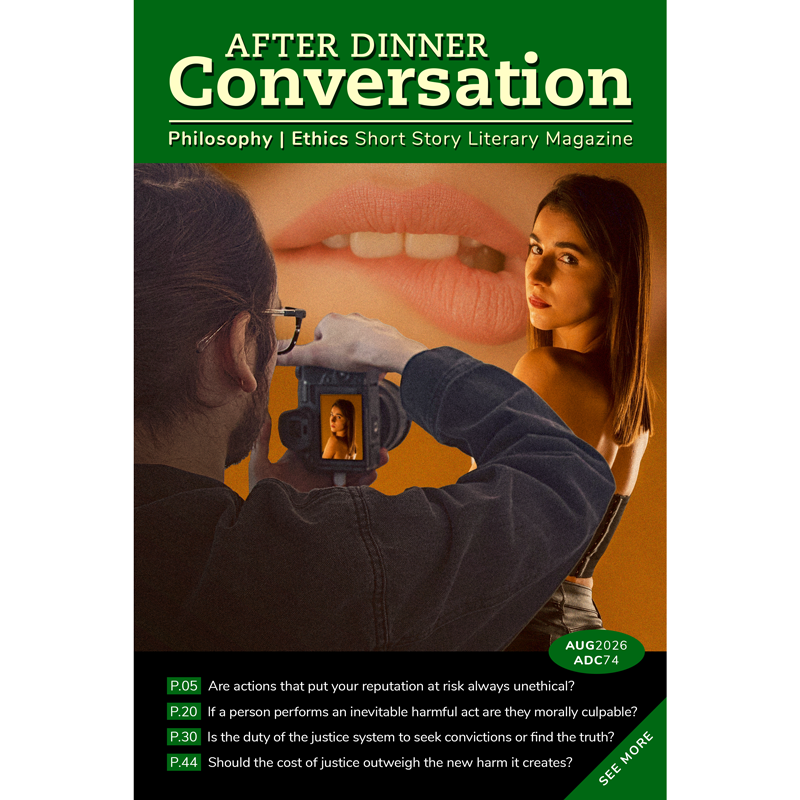
August, 2026 - Philosophy | Ethics Short Story Magazine Is Out!
The August, 2026 - Philosophy | Ethics Short Story Magazine is out! Read exclusive short stories that ask “what if” ethical and philosophical questions. Sign up today on the website to get your copy!

After Dinner Conversation Receives a 2027 Creative Capacity Grant
After Dinner Conversation has been selected to receive a Creative Capacity Grant for fiscal year 2027, funded by the State of Arizona and administered by the Arizona Commission on the Arts. This is the third time our organization has been awarded state arts funding through the Commission.

What does “Categorical Imperative” mean? Kant's Attempt to Build Morality Out of Reason Alone
Some philosophical phrases survive because they sound authoritative even when few people know what they mean. "Categorical imperative" is one of those phrases. It often appears in ordinary language as shorthand for a rule that must be followed no matter what. That usage is not entirely wrong, but it misses both the force and the ambition of the idea. Immanuel Kant did not mean merely that some duties are strict. He meant that morality itself must rest on a kind of rational law that applies to every person simply because they are rational beings.

July, 2026 - Philosophy | Ethics Short Story Magazine Is Out!
The July, 2026 - Philosophy | Ethics Short Story Magazine is out! Read exclusive short stories that ask “what if” ethical and philosophical questions. Sign up today on the website to get your copy!
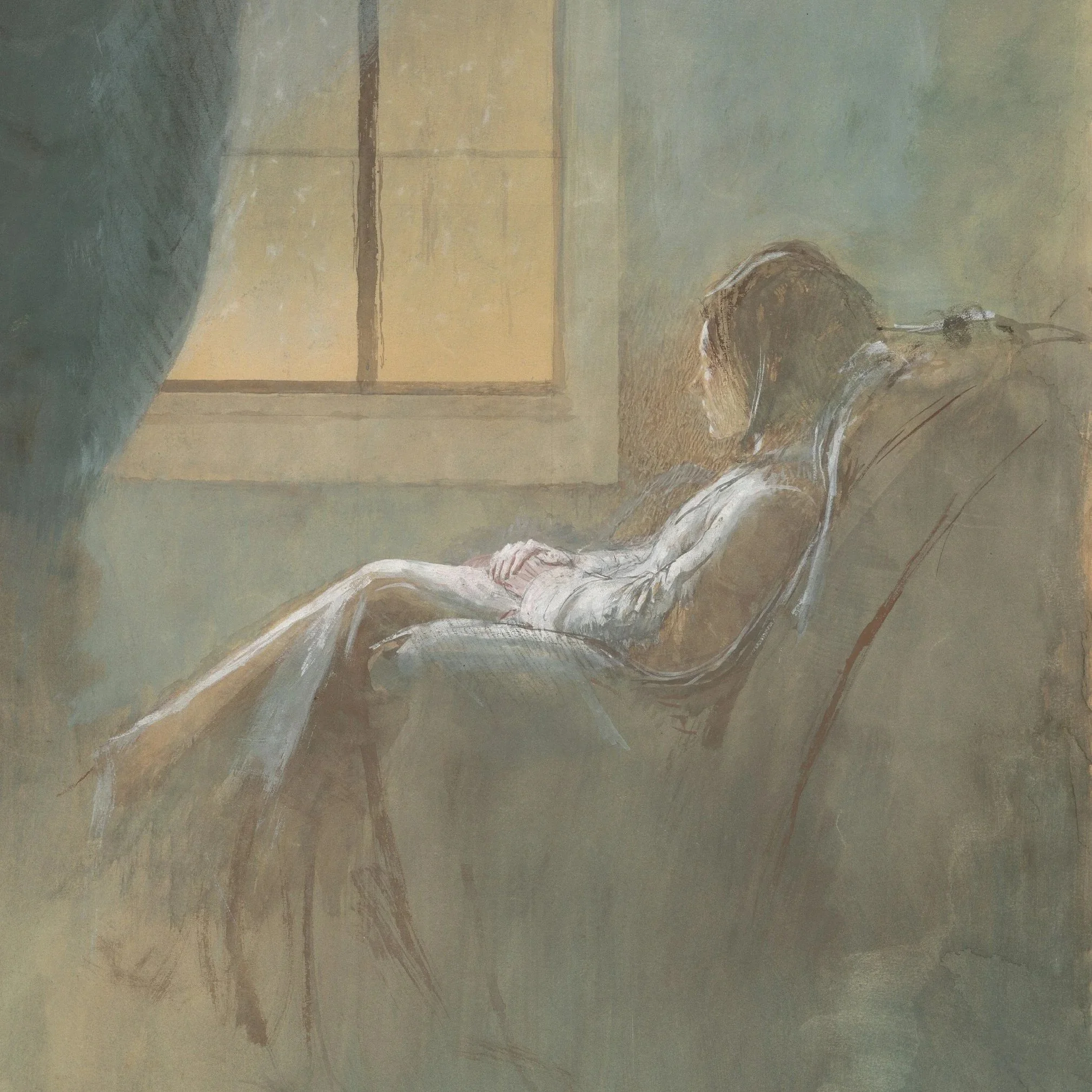
Simone de Beauvoir on Becoming: You Are Not Born Into a Role, You Are Trained Into One
Simone de Beauvoir's most famous claim is also one of her most misunderstood. In The Second Sex, she writes, "One is not born, but rather becomes, a woman." The line is often repeated, but its force is easy to miss. Beauvoir is not saying that the body is unreal, nor is she making the simple point that society influences people. Her argument is stronger than that. She is saying that much of what people take to be natural femininity is actually the result of social formation, repetition, expectation, and constraint.

How to Start a Literary Magazine: What We Learned in Seven Years.
After Dinner Conversation has been publishing for seven years. That feels like a good moment to stop and say something simple: if you are working on a literary magazine, thinking about starting one, or just curious about how this kind of thing actually runs, we are happy to talk.
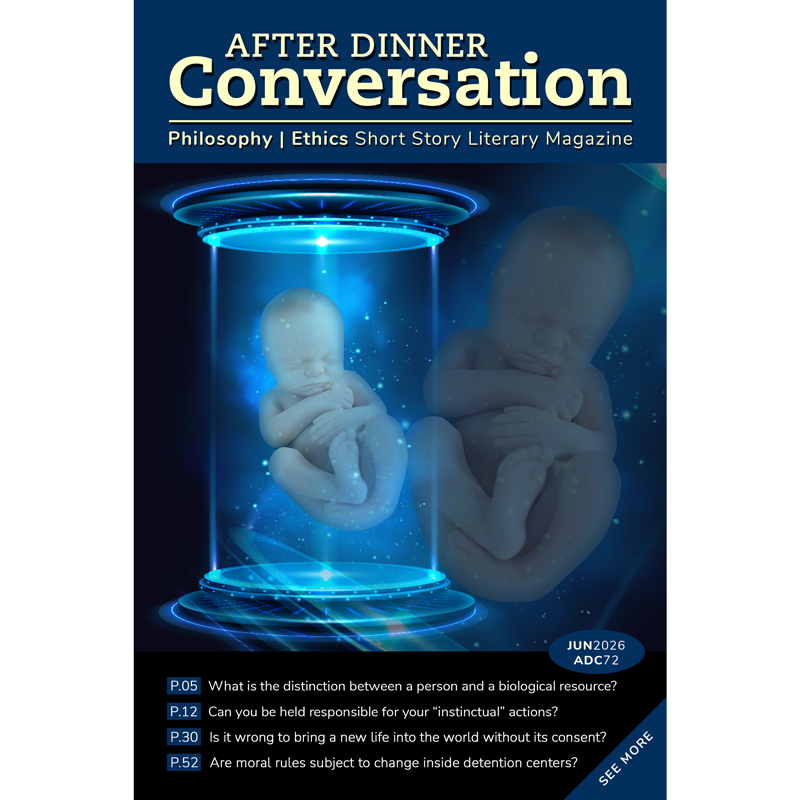
June, 2026 - Philosophy | Ethics Short Story Magazine Is Out!
The June, 2026 - Philosophy | Ethics Short Story Magazine is out! Read exclusive short stories that ask “what if” ethical and philosophical questions. Sign up today on the website to get your copy!

Nozick's Experience Machine: If Happiness Is All That Matters, Why Not Plug In?
Imagine a machine that could give you any life you wanted. Once connected, you would experience perfect success, deep love, creative achievement, pleasure, admiration, or peace. You could feel as though you had written a masterpiece, raised a family, climbed mountains, changed history, or become the person you always hoped to be. Inside the machine, none of it would feel fake. From your point of view, it would simply be your life.

May, 2026 - Philosophy | Ethics Short Story Magazine Is Out!
The May, 2026 - Philosophy | Ethics Short Story Magazine is out! Read exclusive short stories that ask “what if” ethical and philosophical questions. Sign up today on the website to get your copy!