

We Are Now On Substack!
Okay, so first, nothing is changing with After Dinner Conversation. We still have our website, we still have our print magazine, and we still have our digital magazine that comes out as a .pdf, .epub, and .mobi file emailed to you on the first of the month. And you can still subscribe to each of these on our website. If you are a paid subscriber through our website, nothing is changing.

July Philosophy | Ethics Short Story Magazine Is Out!
The July Philosophy | Ethics Short Story Magazine is out! Read exclusive short stories that ask “what if” ethical and philosophical questions. Sign up today on the website to get your copy!

"One must imagine Sisyphus happy" as explained by AI
"One must imagine Sisyphus happy" is a famous quote from the French philosopher Albert Camus, who used the myth of Sisyphus as a metaphor for the human condition.
In Greek mythology, Sisyphus was a king who was punished by the gods for his deceitfulness and hubris by being condemned to roll a boulder up a hill, only to have it roll back down again each time he reached the top. This punishment was meant to be repeated for all eternity.

Hard Choice vs. Ethical Choice
Rule Of Thumb: If you know the right answer, but don't do it because you lack courage, that's probably a HARD CHOICE. If you don't even know what the right answer is, that's an ETHICAL CHOICE.
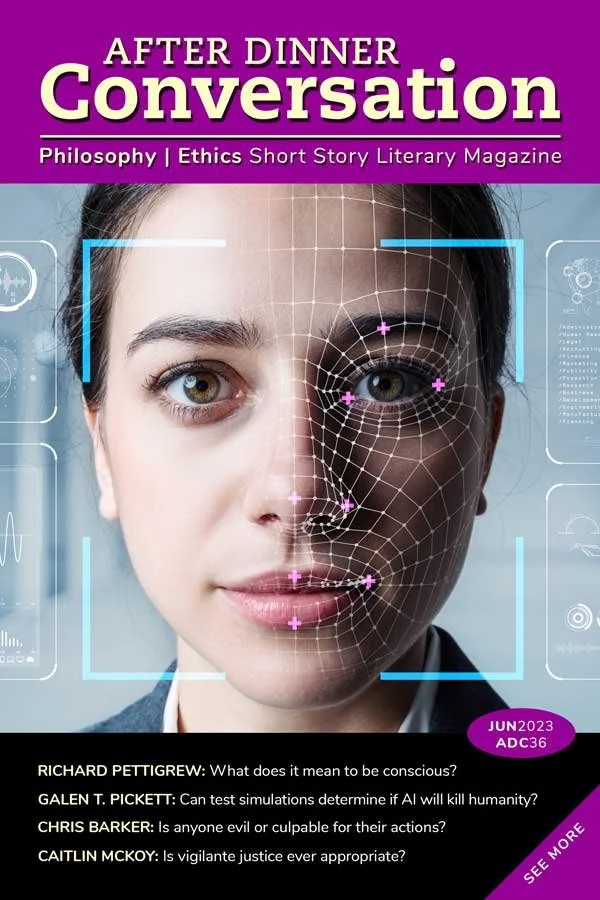
June Philosophy | Ethics Short Story Magazine Is Out!
The June Philosophy | Ethics Short Story Magazine is out! Read exclusive short stories that ask “what if” ethical and philosophical questions. Sign up today on the website to get your copy!

Published Author Demographics
A recent arts grant application requested we get demographic information on those we publish, so we sent an email. Here are the results. I should mention, our review process is, effectively, blind, so this is as much news to us and gives us much to consider.

René Descartes (As Explained by AI)
René Descartes was a French philosopher, mathematician, and scientist who is considered one of the founders of modern western philosophy. His philosophy is often referred to as Cartesianism, and it centers around the idea that the mind and the body are separate entities, and that the mind is capable of knowing certain truths independently of sensory experience.
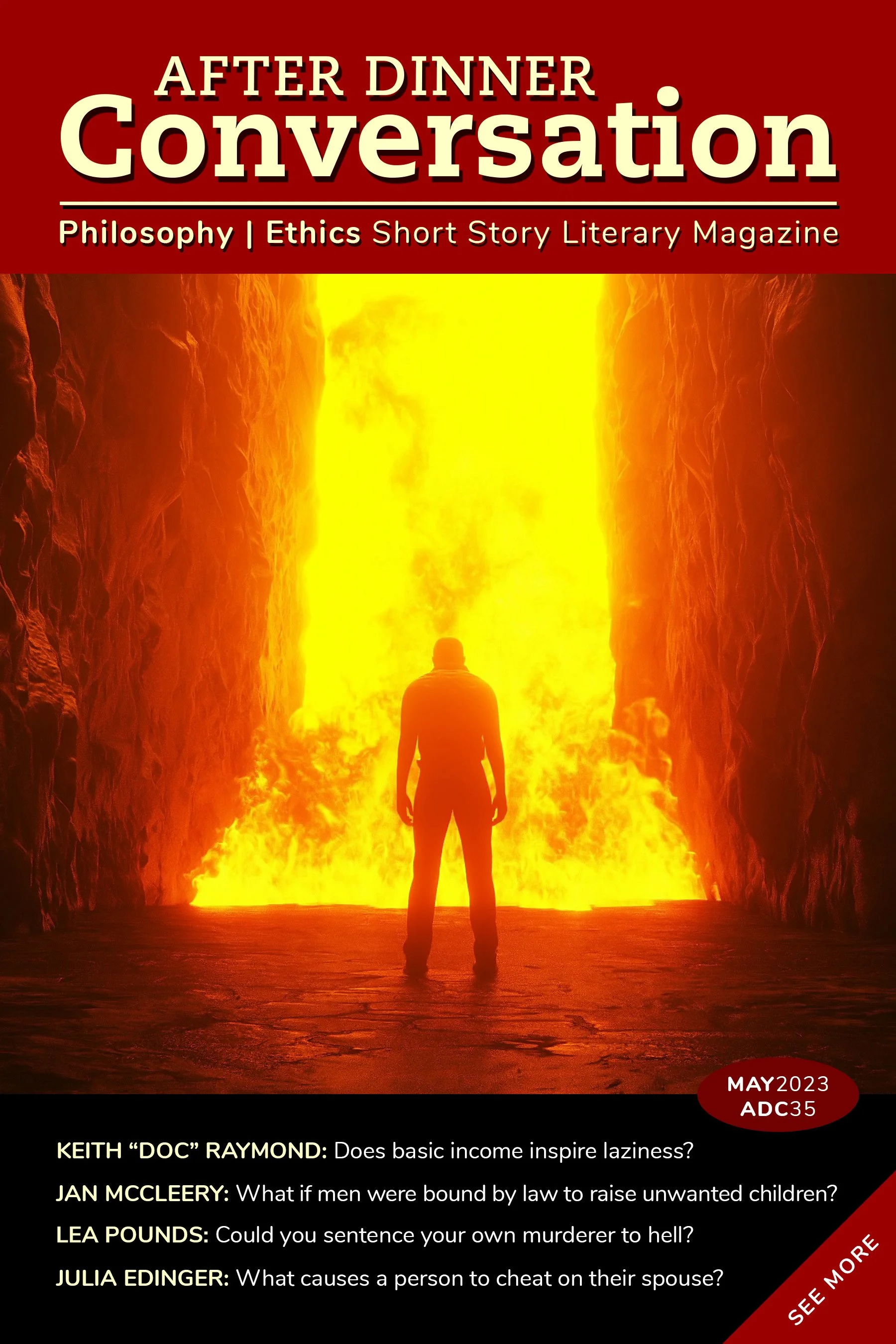
May Philosophy | Ethics Short Story Magazine Is Out!
The May Philosophy | Ethics Short Story Magazine is out! Read exclusive short stories that ask “what if” ethical and philosophical questions. Sign up today on the website to get your copy!
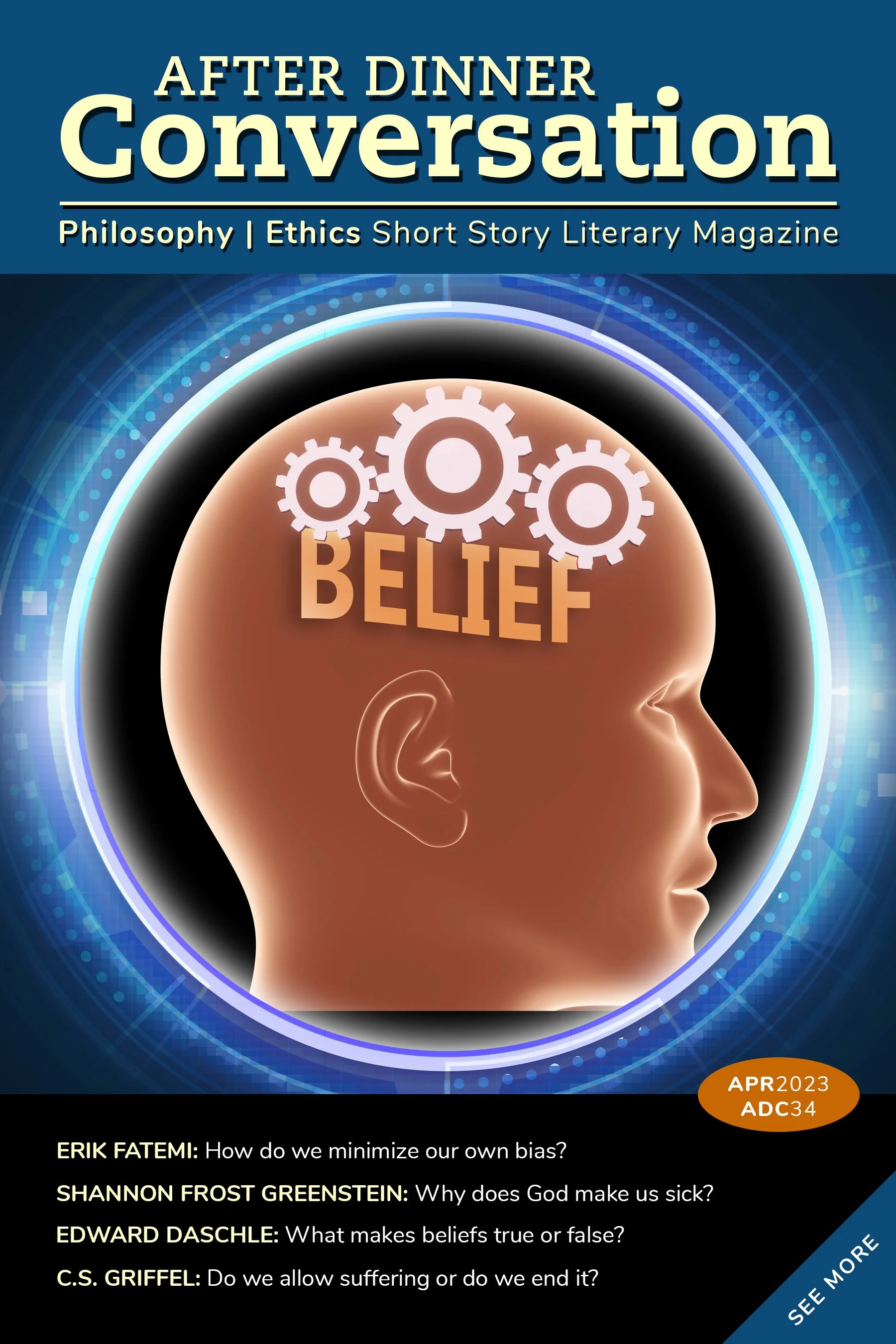
May Philosophy | Ethics Short Story Magazine Is Out! (Copy)
The April Philosophy | Ethics Short Story Magazine is out! Read exclusive short stories that ask “what if” ethical and philosophical questions. Sign up today on the website to get your copy!

Philosophy Ethics Short Story Magazine Interview on LitMag News
After Dinner Conversation Editor, Kolby Granville, was recently interviewed by LitMag News regarding the their monthly philosophy ethics short story literary magazine.